Why Data Centres Need On-Site Resilience
by Graham Robson, Head of Electrical & Power Systems Engineering
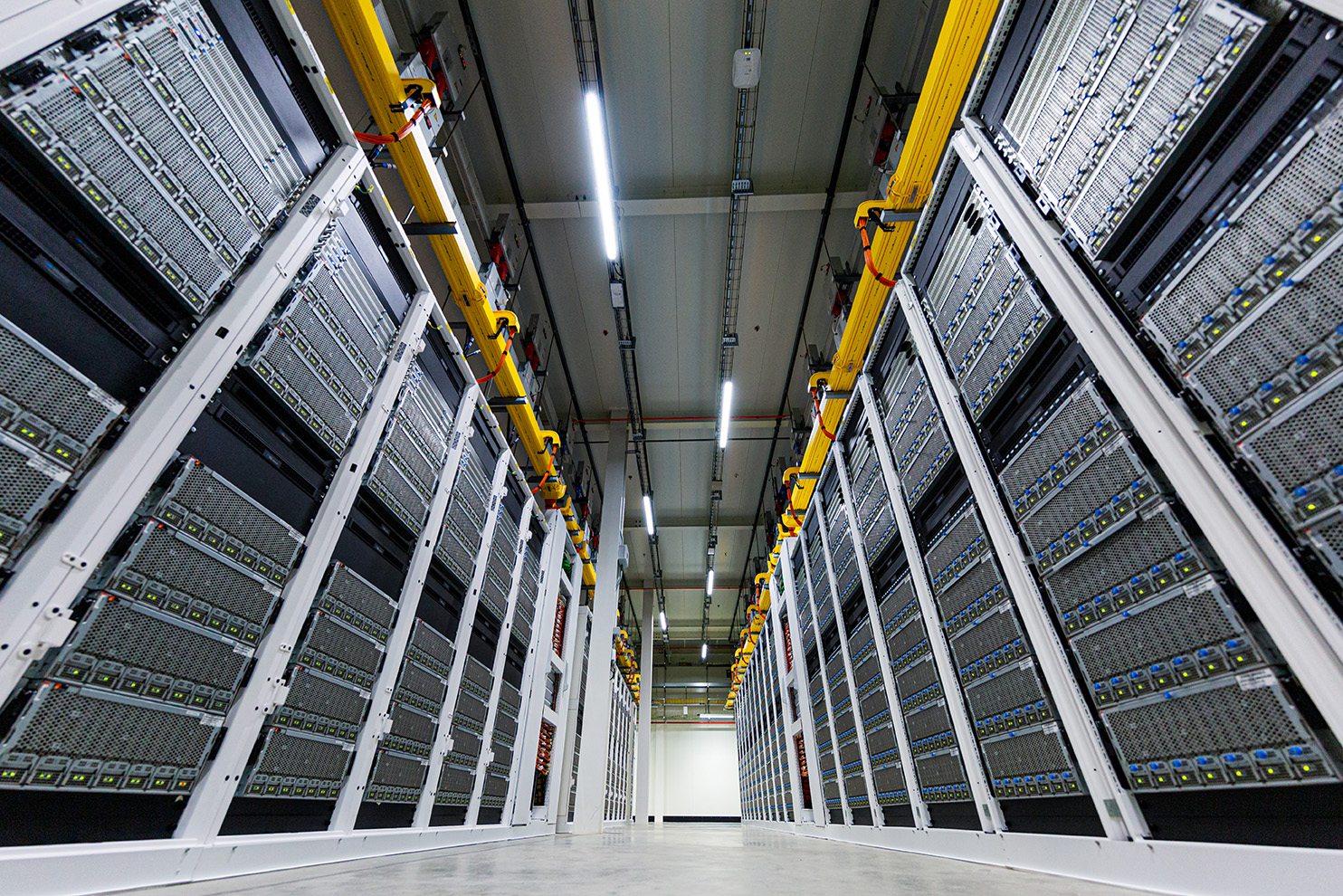
A data centre's grid connection is its lifeline. If it fails, the facility fails.
That sounds obvious, but it has big consequences for how these facilities should be designed. When driven by AI, cloud computing, high-resolution rendering, autonomous systems and data storage of every kind, it’s no surprise that demand for data centre capacity has grown as fast as it has. However, the grid simply wasn't built for it and unfortunately resilience can't be something added at the end - it must be designed into the power architecture from day one.
The grid can't be taken for granted
More and more we are seeing Distribution Network Operators increasingly struggle to offer the connection sizes data centres need. When you apply for a connection, the number you submit becomes your ceiling and if you underestimate that, or don't plan for growth, you face a constraint that is very difficult and expensive to fix once the project is underway.
We have already seen instances where this error has proven the deciding factor in where data centres are built. There's growing interest in Scotland and the north of England, close to where renewable energy is generated, and where cooler conditions help with the heat these facilities produce. But even then, a well-sited facility can't rely on the grid alone.
What on-site resilience looks like at scale
For larger facilities, on-site resilience typically requires an integrated power system capable of maintaining critical loads through a loss of grid supply. Depending on the site and operating philosophy, that may combine:
- Standby generation that can pick up the full critical load.
- Uninterruptible power supplies (UPS) to bridge the gap while generation starts.
- Battery energy storage, where appropriate, to provide additional resilience, flexibility or support integration of on-site generation
- Renewables, with wind and solar as the obvious starting points, integrated into the site's power system.
- Protection coordination that holds it all together under fault conditions.
The scale of investment is mind-numbingly significant. In fact, to reinforce that statement, one hyperscale operator ran a long-duration test of around 18 × 1,500 kVA generator sets in its car park, just to validate its uptime. That is the standard of resilience these operators expect.
Prove it before you build it
The most expensive mistakes on complex electrical projects are almost never made during construction. They're made at the front end, when design goes ahead before the power system has been properly modelled and proven. Getting the design right before ordering matters more than ever.
The International Energy Agency found in 2025 (source) that large power transformers can now take up to four years to secure, and lead times have almost doubled since 2021. The pressure is serious enough that Ofgem (source) now lets UK transmission owners buy equipment years ahead of need. Change your design after ordering, and you're back in the queue.
For a data centre, that means building the whole distribution network in a power system simulation tool such as ETAP before detailed design begins. It means running load flow and fault studies for every operating scenario – for normal running, loss of grid, generator start-up, battery discharge. Then size transformers, switchgear, generators, storage and protection on those proven results thereafter, not on rules of thumb.
Once that groundwork is done, the detailed design becomes disciplined, repeatable work. You're applying a proven solution at scale rather than solving new problems on every drawing, which reduces both the cost and the risk of error.
Your track record is in Offshore Brownfield Engineering, what makes you think you can handle this?
Offshore, an electrical failure can often be a safety emergency. Thus, every system is engineered for uptime, for resilience, and for handling failures without catastrophic outcomes and power continuity is treated as a non-negotiable requirement.
Data centres need the same mindset and if you don’t want to take our word for it, the numbers are there to back it up. The Uptime Institute's latest Annual Outage Analysis found that power was the leading cause of serious data centre outages, behind 45% of operators' most recent impactful outages in 2025. More than half said their last major outage cost over $100,000, and one in five said it cost over $1 million (source).
Power remains the leading cause of these outages.
The stakes may differ, from computing uptime to personnel safety, but the engineering discipline is directly comparable. So are many of the systems: standby generation, UPS and battery systems, electrical distribution and protection coordination are everyday engineering challenges offshore.
Combined with power system modelling, that experience means we can engage with the hardest part of data centre electrical design: making sure the power never stops.
Curious how Katoni can help you in the data centre space? Find out here.
Speak to Our Team
Have a question or need support? Reach out and our team will get back to you promptly.